 Most popular6,189 m
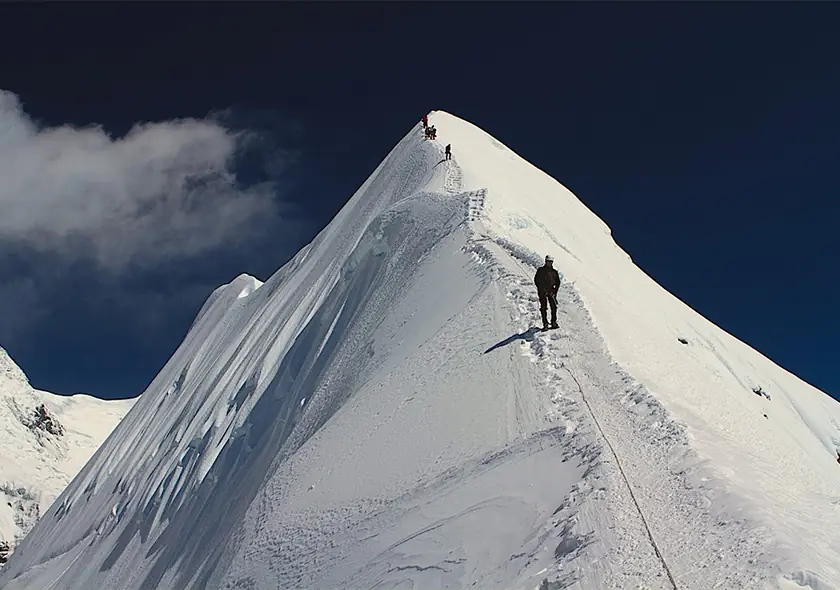
Island Peak Climbing
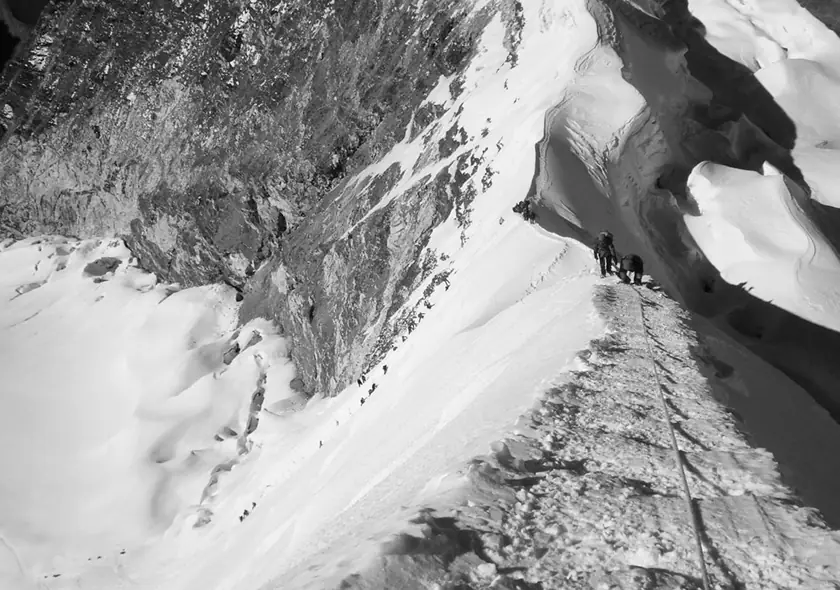
The classic first Himalayan summit, below the south face of Lhotse, with a spare day for bad weather.
- 16 days
- Alpine PD+
- Fixed ropes
FromUSD 2,349
Island Peak, Mera, Lobuche and other 6,000 m trekking peaks, through to Ama Dablam, Baruntse, Cho Oyu and Everest. Licensed climbing guides, permits and high camps, all handled by our team in Kathmandu.
Our Kathmandu office usually replies on WhatsApp within a few hours
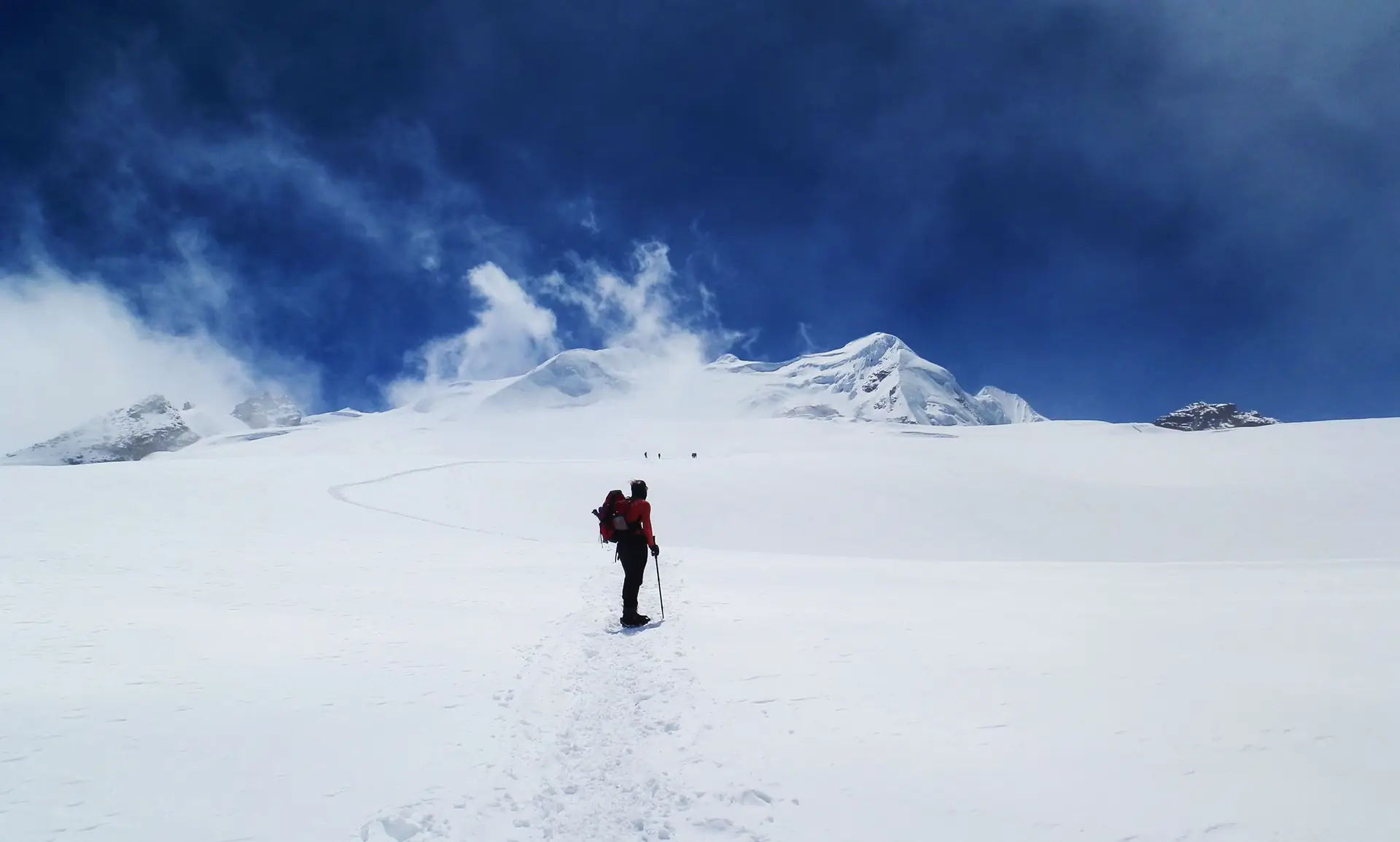
On the Mera Peak glacier, Hinku valley
Every climb includes a licensed climbing guide, the climbing permit, high-altitude tents and a government summit certificate. Prices are per person.
Most popular6,189 mThe classic first Himalayan summit, below the south face of Lhotse, with a spare day for bad weather.
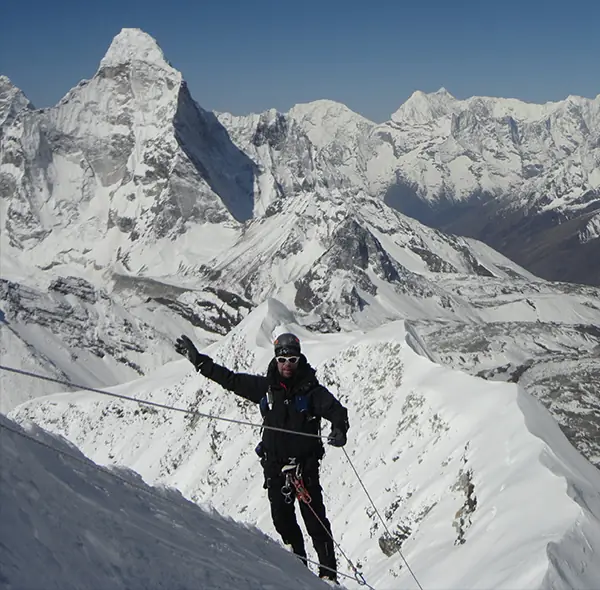 Best acclimatised6,189 m
Everest Base Camp and Kala Patthar first for better acclimatisation, then the summit.
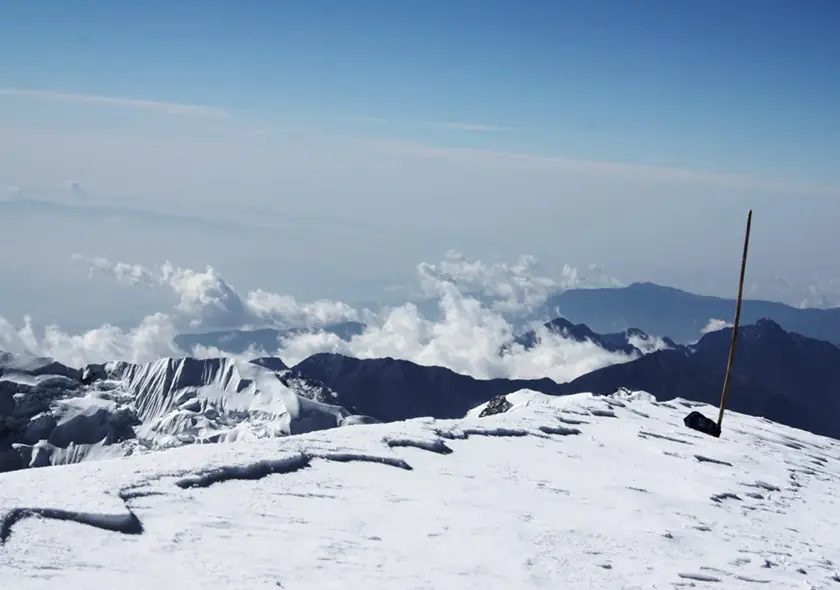 Highest trekking peak6,476 m
A glaciated, mostly non-technical summit with views of five 8,000 m peaks, including Everest.
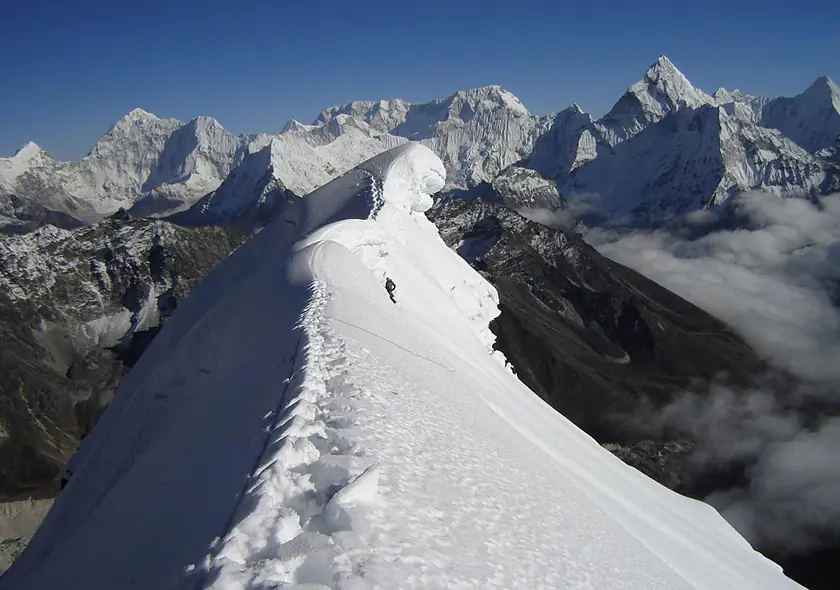 Technical6,119 m
Base Camp and Kala Patthar, a training day, then a steeper, more exposed summit than Island Peak.
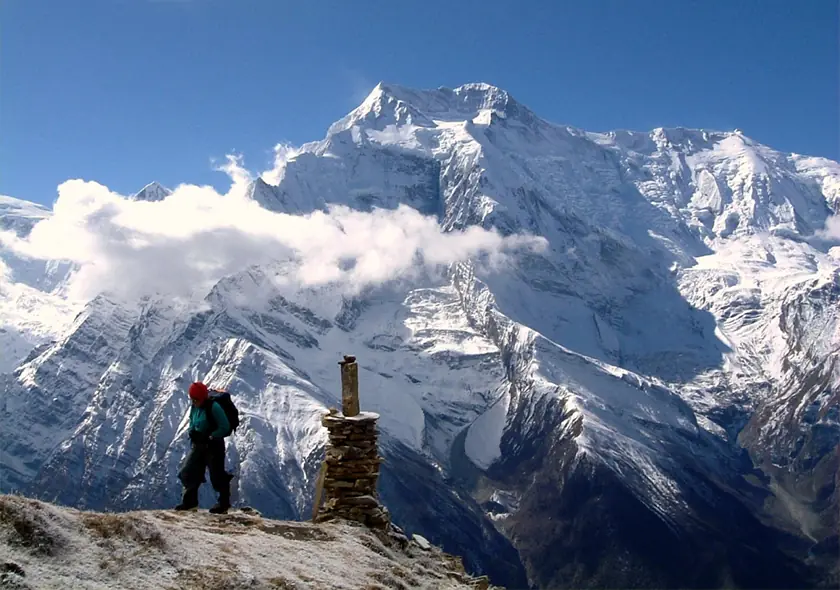 Annapurna region6,091 m
Summit above the Manang valley, then cross Thorong La on the Annapurna Circuit.
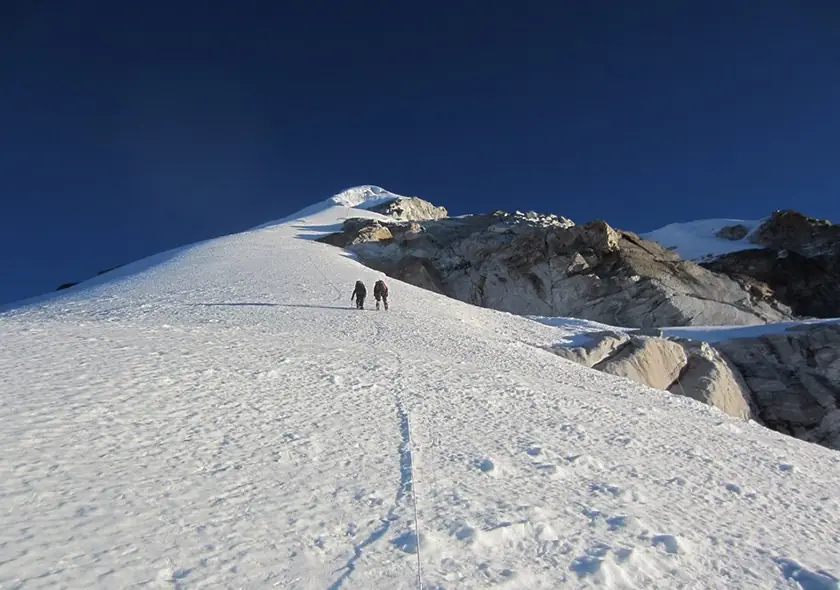 Off the beaten path6,186 m
A quiet rock-and-snow summit in a side valley above Namche, far from the crowds.
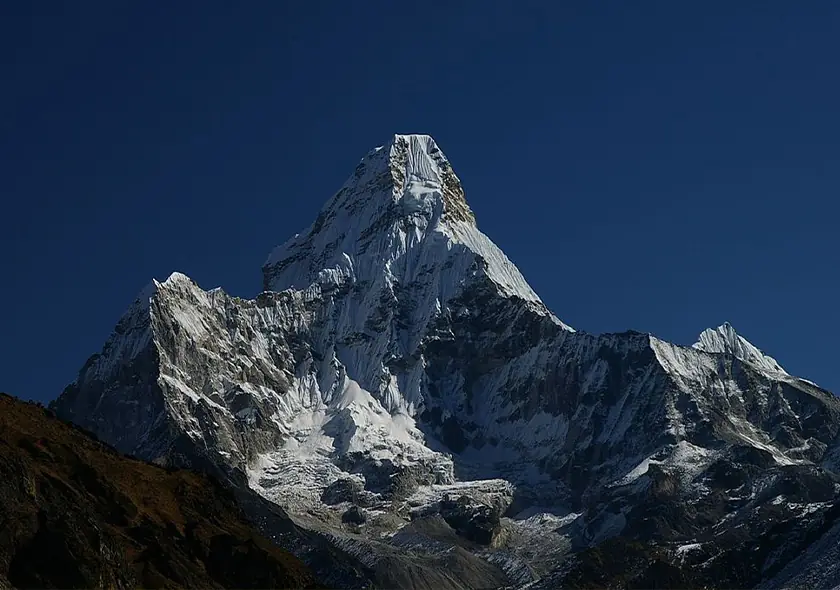 The climber's mountain6,812 m
Steep rock, ice and exposed ridges on the Southwest Ridge, the route of the 1961 first ascent.
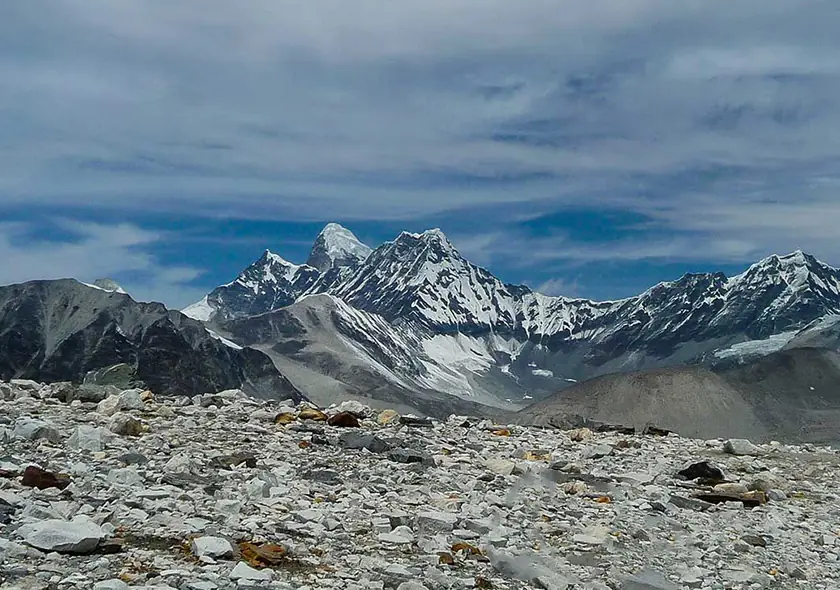 First 7,000er7,129 m
Through the Hinku valley and over Mera La to a 7,000 m summit: the natural step towards 8,000 m.
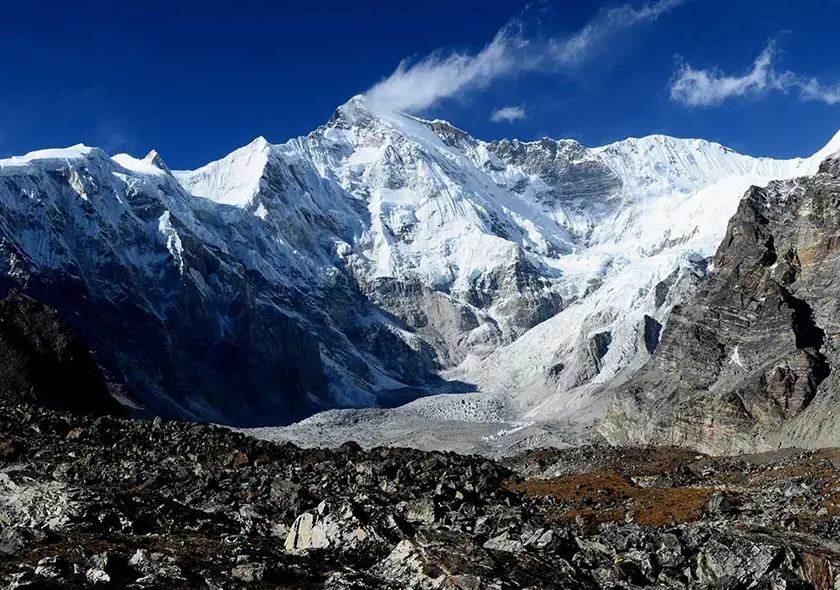 First 8,000er8,188 m
The world's sixth-highest mountain, climbed from Tibet, and often called the most accessible 8,000 m peak.
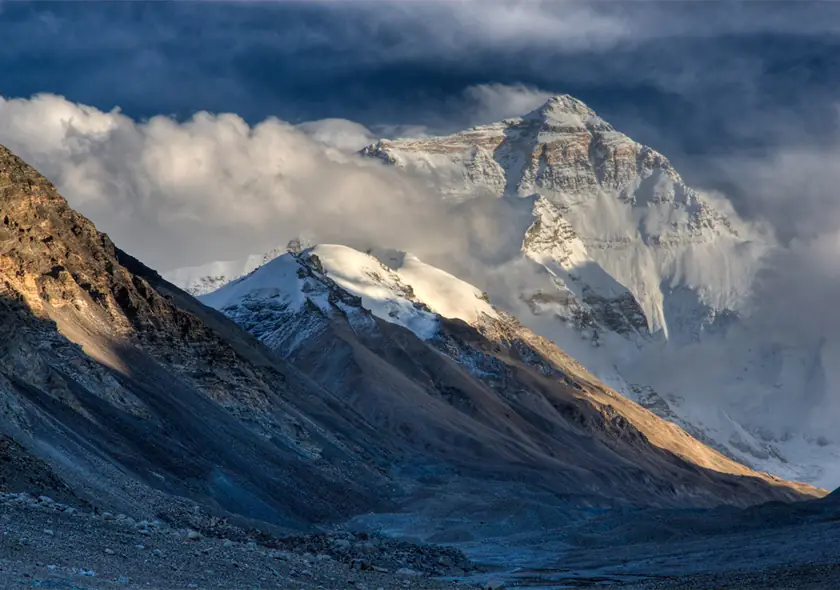 Top of the world8,849 m
The South Col route from Nepal, through the Khumbu Icefall, in a full spring expedition season.
Want a private climb, a different peak or to combine a summit with a trek? Tell us what you have in mind and we'll build a custom plan.
Most climbers work their way up. Start on a trekking peak, add technical skills, then step up to 7,000 m and 8,000 m. Pick a peak to compare it.
Alpine grades (F = easy, PD = moderately difficult, AD = fairly difficult) are approximate and change with snow and ice conditions.
Answer three quick questions and we'll suggest the climb that matches your experience, time and ambitions.
Your recommended climb will appear here.
Answer all three questions to see it.
Choose a climb to see its altitude profile and daily plan. Tap a day for details. Summit days depend on weather, so every climb has a spare day.
The altitude listed for each day is the highest point you reach. On expeditions you climb to the high camps and come back down to base camp several times to acclimatise before the summit push.
Join a small climbing team on a fixed date, or climb privately on dates that suit you. One clear price per person.
| Start (arrive Kathmandu) | Finish | Price per person | Status | Reserve |
|---|
Warmer summit days and long weather windows. Everest and Lhotse teams fill the Khumbu, and Everest summits usually come in mid to late May.
The most stable weather of the year and the clearest views. This is the main season for Ama Dablam and the trekking peaks.
Clear skies but bitter cold and strong winds high up. We only recommend 6,000 m peaks in winter for experienced, well-equipped climbers.
Shown for the 16-day Island Peak climb. Expeditions add full base camp services, high camps and medical oxygen. Every trip page lists its exact inclusions.
Tip: most climbing gear can be rented in Thamel. We'll send you a gear list and check your kit in our office before you fly to Lukla.
We're based in Thamel, Kathmandu. The person who answers your message is part of the team that plans, staffs and supports your climb.
Many of our guides have worked in the Himalaya for more than 20 years. Every climbing guide is licensed and first-aid trained.
Acclimatisation days and a spare summit day on every peak climb. Expeditions carry medical oxygen and a Gamow bag at base camp.
Climbing permits, Lukla flights, base camp, high camps and the government summit certificate, all arranged in Kathmandu.
We support communities through our work with the Pioneer Foundation, a Kathmandu non-profit.
Great experience! I did the Island Peak Climb, everything was very well organised and our climbing guide was one of the most experienced.
I had never done anything like this before, climbing a peak, and they were very helpful in directing me to what I needed to get and do before arriving.
My guide Khem and porter Dhurba have been excellent companions during the trek. Caravan has made things really easy from the very beginning.
My gratitude to Gautam, the owner, who spent a lot of time planning this, making changes up to the last minute, always adapting everything to my needs.
I'm satisfied with how Caravan Outdoors managed to pull this trip off. The flights to Lukla weren't going for days, but they managed to get me there.
Caravan Outdoor means assistance, courtesy, know-how. Thank you very much for this experience.
Tell us what you've climbed or trekked before and we'll tell you honestly which peak makes sense, or what to do first.
Ask on WhatsAppNo previous summit is needed, but you must be a fit, confident trekker. Island Peak uses crampons, a harness and fixed ropes on its headwall. Mera Peak is less technical but higher, so altitude is the main challenge.
Your climbing guide goes through crampon, harness and ascender use with you before summit day. Some practice at home or on a climbing wall helps.
Peaks such as Island Peak, Mera Peak, Lobuche East and Pisang are permitted by the Nepal Mountaineering Association (NMA) as "trekking peaks". They are real alpine climbs, but shorter and less technical than expedition peaks like Ama Dablam or Everest, which need a government expedition permit.
Island Peak (6,189 m) is steeper and more technical, with a fixed-rope headwall and an exposed summit ridge. Mera Peak (6,476 m) is higher but mostly a long glacier walk with little technical climbing. Choose Island Peak to learn rope skills, or Mera to test yourself at higher altitude.
Mountaineering boots, crampons, a harness, ice axe, ascender (jumar), belay/rappel device, helmet and a warm down jacket, plus your normal trekking kit. Most of it can be rented in Thamel. We'll send you a full gear list and check everything before you fly.
April–May and October–November have the most stable weather. Autumn is Ama Dablam's main season. Everest is climbed in spring, with summits usually in mid to late May. Cho Oyu is climbed in autumn and spring.
Our 16-day Island Peak climb starts from USD 2,349 per person. That includes the climbing permit, a licensed climbing guide, porters, Lukla flights, all meals on the trek and high-altitude tents. Mera Peak starts from USD 2,599, and expeditions from USD 6,699 (Ama Dablam).
Every peak climb has a spare day so we can wait for a better window. Your guide decides on the day based on weather, snow conditions and how the team is doing. The summit is optional; coming home safely isn't.
A climbing permit for your peak (from the NMA for trekking peaks, or the Department of Tourism for expedition peaks), plus national park and local area permits. Cho Oyu is climbed from Tibet and needs a Chinese climbing permit and Tibet travel documents. We arrange all of them.
A policy that covers mountaineering with ropes up to your peak's altitude, including helicopter rescue and medical evacuation. Many travel policies exclude roped climbing, so check the wording carefully.
A deposit of USD 200 per person secures your place. You can pay it by card through our secure online payment page. The balance is paid before departure or on arrival in Kathmandu.
No booking engine to wrestle with. Message us and a real person in Kathmandu will plan the climb with you.